
Mortgages for Medical Professionals in Toronto North York Centre: What Doctors and Healthcare Workers Need to Know Before Buying
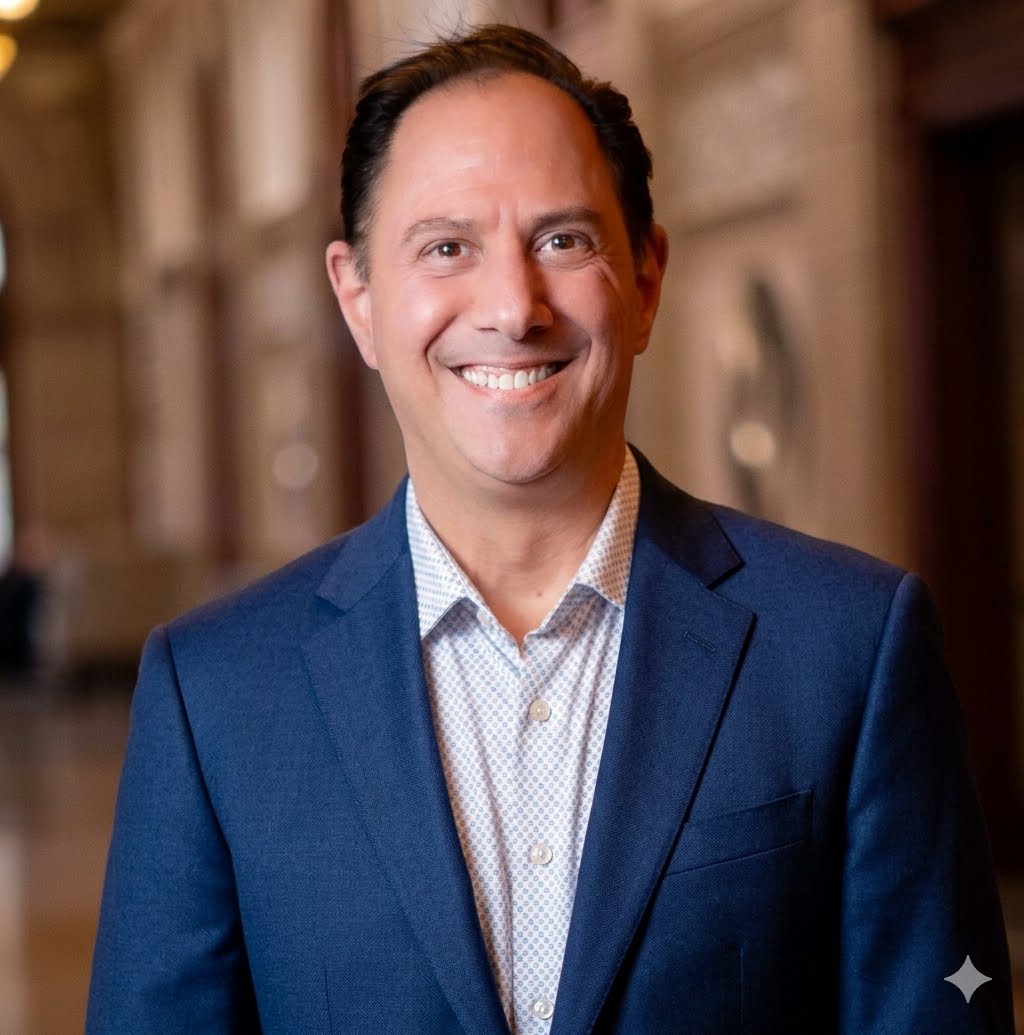
Rob Goodman is a Mortgage Agent Level 1 in Toronto - North York Centre specializing in Mortgages for Medical Professionals. Through the Sherwood Mortgage Group, Rob works with physicians, residents, fellows, and incorporated healthcare professionals across the Greater Toronto Area and surrounding communities — not only in North York Centre but throughout the broader GTA market where medical professionals are navigating some of the most complex mortgage situations in Canada.
Right now, one of the most pressing questions among doctors and healthcare workers in Toronto is whether physician-program pricing and special underwriting still apply when home prices are as high as they are. Affordability has tightened considerably across the GTA, and many medical professionals are asking whether the programs designed for their income structure can still move them forward — or whether higher purchase prices have quietly closed a door they assumed was open.
Key Takeaways
- Physician mortgage programs use future earning potential and professional income structure as qualifying factors — not just current reported income.
- Residents, fellows, and newly licensed physicians can qualify under specialized underwriting that accounts for the transition from training income to attending income.
- Incorporated medical professionals face additional documentation requirements, but lenders with physician programs understand how to read corporate income structures.
- Down payment minimums, income documentation requirements, and lender appetite vary significantly — contact Rob Goodman directly for current program details and today's rates.
What Makes Mortgages for Medical Professionals Structurally Different
Mortgages for Medical Professionals are built around earning trajectory and professional status rather than current documented income alone — a fundamentally different underwriting logic from what applies to salaried employees. This matters enormously for residents, fellows, and early-career physicians whose T4 or Notice of Assessment income does not reflect what they will earn within 12 to 24 months of completing training.
Standard mortgage qualification relies heavily on two consecutive years of documented income. For a physician finishing a residency or fellowship, that two-year lookback captures training stipends — not attending physician compensation. A standard lender reading those documents sees a borrower whose income does not support the purchase price. A lender with a physician program reads the same file through a different lens: professional designation, employment contract or letter of offer, and the income trajectory that designation represents.
The structural difference extends to debt treatment as well. Medical school debt is substantial for many physicians, and how a lender treats that debt load in the debt-service calculation has a direct effect on whether a file qualifies. Some physician programs apply modified debt-service treatment for professional student loans, recognizing that the debt-to-income ratio at graduation is not predictive of the borrower's financial position within a few years of practice. According to the Canadian Medical Association, medical students in Canada graduate with a median debt of approximately $80,000 — a figure that underscores why standard debt-service calculations routinely misread physician files.
This is why working with a broker who understands Mortgages for Medical Professionals is not a convenience — it is a structural necessity. The same file submitted to a lender without a physician program will produce a different outcome than the same file submitted to one that has built its underwriting criteria around how medical professionals actually earn, borrow, and grow income over time.
For medical professionals buying in Toronto or North York Centre, where purchase prices are frequently well above what standard underwriting is calibrated to handle, the stakes of that framework selection are significant. A lender mismatch at this price point does not produce a marginal inconvenience — it produces a declined file or an approval that does not reflect the borrower's actual financial position.
How Residents and Fellows Qualify When Training Income Is the Only Income on File
Residents and fellows can qualify for physician mortgage programs even when their current income is a training stipend rather than an attending salary. The key qualifying document is a signed employment contract or letter of offer confirming the post-training position and compensation — lenders with physician programs use that forward-looking income figure in the qualification calculation, not the stipend on last year's tax return. The Canadian Resident Matching Service reports that over 3,000 residents match to postgraduate positions across Canada each year, reflecting the scale of this borrower population navigating exactly this income-documentation gap.
The federal mortgage stress test applies regardless of whether the borrower is a resident or an attending physician. What changes under a physician program is the income figure used in that calculation — the offer-letter income rather than the training stipend.
For residents and fellows who do not yet have a signed offer letter — for example, those still in the final year of training — the qualifying path is narrower but not closed. Some lenders will accept a letter from a department head or program director confirming expected compensation, combined with proof of registration in good standing with the relevant provincial college. The documentation threshold varies by lender, which is why understanding the specific requirements of each physician program matters before a file is submitted.
Down payment documentation is a separate requirement that does not change based on professional status. Residents and fellows often draw on gifted down payments from family members, registered savings, or professional lines of credit. Each source has its own documentation requirement, and lenders will ask for a paper trail confirming the origin and availability of the funds. Assembling that documentation before beginning the approval process reduces the risk of delays once an offer is accepted. Rob Goodman works with residents and fellows across the Toronto - North York Centre market to ensure documentation is structured correctly before any lender submission is made.
Incorporated Physicians and the Self-Employment Documentation Challenge
Incorporated physicians qualify for physician mortgage programs, but the documentation requirements are more layered than for salaried physicians — and that distinction is frequently mishandled in standard mortgage applications. The core issue is that incorporated professionals pay themselves through a combination of salary and dividends, and the income that appears on a personal tax return may not reflect the actual earnings available to service a mortgage. According to the Business Development Bank of Canada, nearly 2 million Canadians work for themselves — and the documentation complexity that comes with self-employment is a shared challenge across that population, though the specifics for incorporated physicians have their own structure.
For an incorporated physician, a lender with a physician program will typically want to review two years of corporate tax returns (T2), personal tax returns (T1 General), and the Notice of Assessment for each year. The lender's goal is to understand the total income available from the corporation — not just what was paid out as salary. Some physician programs will gross up dividend income or add back retained earnings when calculating qualifying income, which produces a meaningfully different result than a standard self-employed assessment.
The two-year income averaging rule that applies to most self-employed borrowers is the default, but physician programs may apply modified treatment for physicians who incorporated recently — within the past 12 to 18 months after completing training. In those situations, the lender may rely more heavily on the employment contract or billing history than on the two-year average, provided the professional documentation is strong.
Statistics Canada reported that self-employed workers in Canada increased by 44,000 in a single month in mid-2026, reflecting how common self-employment structures have become across the workforce. For incorporated physicians specifically, that structural reality means lenders who serve this population have developed more refined tools for reading corporate income — but those tools are not available at every institution. Matching the file to the right lender is the first step.
What GTA Home Prices Mean for Physician Program Eligibility
Physician programs remain available in the GTA, but higher purchase prices affect how those programs apply in practice — particularly around insurance eligibility and down payment thresholds. Purchases above the federal mortgage default insurance threshold must be underwritten as conventional, uninsured mortgages, which shifts the lender pool and changes the documentation standard. According to the Toronto Regional Real Estate Board, the average selling price for all home types in the GTA was approximately $1.1 million in early 2025 — a price point that places the majority of physician purchases firmly in the uninsured, conventional lending category.
For a physician buying in Toronto or North York Centre at prices that exceed the insurable threshold — which is common in many neighbourhoods — the minimum down payment requirement is a hard threshold set by federal regulation. Physician programs do not override this federal threshold. What they do is apply more flexible income qualification logic within the conventional lending framework, which can make a meaningful difference in what purchase price a physician can qualify for even at the uninsured tier.
The question of whether physician-program pricing still applies at higher purchase prices comes up consistently in the current market. The answer is that the program's income qualification advantages carry through regardless of purchase price — but the down payment and insurance rules are set by federal regulation and do not flex. A physician with a strong income trajectory and a sufficient down payment can still access physician-program underwriting on a high-value purchase; the program does not disappear at a certain price point.
Physicians as a borrower class have historically maintained strong repayment profiles, which is part of why lenders have developed programs specifically for this population. That profile does not eliminate the need for proper documentation, but it does inform how lenders approach risk assessment for physician files.
Common Misconceptions About Physician Mortgage Programs
The most common misconception is that physician programs are available everywhere and that any lender will apply them automatically once a borrower identifies as a physician. In practice, physician programs are offered by a specific subset of lenders, and the terms, income treatment, and documentation requirements vary significantly between them. Not every institution that serves medical professionals has a formal physician program — some simply apply standard underwriting with a note about professional status. OSFI's residential mortgage underwriting guidelines confirm that lender-specific program criteria operate within a federally regulated framework, which is why program availability differs materially from one institution to the next.
A second misconception is that physician programs remove the need for documentation. They do not. What physician programs change is the type of documentation that qualifies and how that documentation is interpreted. A resident still needs to provide proof of professional registration, a letter of offer or employment contract, and evidence of down payment funds. An incorporated physician still needs corporate and personal tax returns. The documentation burden is differently structured — not lighter.
A third misconception is that the stress test does not apply to physician borrowers. The federal mortgage stress test, administered under OSFI's B-20 guidelines, applies to all federally regulated lenders regardless of the borrower's profession. Physician programs work within that framework, not around it. The advantage is in how qualifying income is calculated — not in whether the stress test applies.
For medical professionals who have received a declined application from one institution, a decline from one lender does not reflect the full landscape of available programs. The structure of the file — how income is documented, which lender receives it, and how debt is presented — shapes the outcome. A file that does not fit one lender's criteria may fit another's without any change to the borrower's actual financial position. This is the practical value of working with a broker like Rob Goodman, who has access to multiple lenders with physician programs rather than a single institution's product shelf.
An Illustrative Scenario: When Standard Underwriting Misreads the File
The outcome of a physician mortgage application is determined by which framework reads the file — not by the borrower's actual financial position. Consider a scenario that reflects a common pattern in Mortgages for Medical Professionals: a physician finishing a two-year fellowship in Toronto, with a signed offer letter for an attending position starting within 60 days, looking to purchase a property before the position begins. The training stipend on the most recent tax return is a fraction of the incoming attending salary. The physician has a professional line of credit, a modest RRSP, and a family gift available for the down payment.
In a standard application, the income used for qualification is the documented income on file — the stipend. The debt-service calculation using that figure produces a qualifying amount well below the purchase price. The file is declined or approved for an amount that does not reflect the borrower's actual near-term financial position.
In a physician program application, the same file is read differently. The offer letter income is used as the qualifying income. The professional line of credit is treated according to the program's debt guidelines. The down payment sources — RRSP, gift, and line of credit — are each documented and confirmed. The result is an approval that reflects where the borrower actually is in their career trajectory, not where their tax return suggests they are.
The generalizable truth is that the file itself does not change — the framework used to read it does. Matching the file to the right framework is the work that happens before a single document is submitted to a lender. For medical professionals in the GTA, that matching process is where the outcome is determined. The Financial Consumer Agency of Canada notes that mortgage pre-approval periods typically run 60 to 130 days — which means the framework selection and documentation assembly that precede a lender submission are time-sensitive decisions, not administrative afterthoughts.
What Healthcare Workers Who Are Not Physicians Should Know
Physician programs are the most widely known category within Mortgages for Medical Professionals, but dentists, pharmacists, optometrists, chiropractors, and other regulated health professionals may qualify for professional mortgage programs that apply similar income-qualification logic — though the specific terms vary by lender and by profession. Understanding which programs apply to a given professional designation requires reviewing the file with a broker who works across the full range of healthcare professional income types.
Nurses, physiotherapists, and other allied health professionals who are salaried employees typically qualify under standard mortgage underwriting, but their income structure may include shift premiums, overtime, and part-time employment across multiple employers — all of which require specific documentation to be used in the qualification calculation. A nurse working two part-time positions, for example, needs to demonstrate a two-year history of that combined income before most lenders will use the full amount. Rob Goodman works with healthcare workers across this full range of professional income types in the Toronto - North York Centre market.
Healthcare workers who are incorporated — whether as a professional corporation or through a management services organization — face the same documentation complexity as incorporated physicians. As of early 2026, just under 2.7 million Canadians were self-employed, equal to 12.8% of total employment — a figure that includes a meaningful share of regulated health professionals operating through professional corporations. The two-year corporate tax return requirement applies, and the income grossing and add-back treatment depends on the lender's program.
For healthcare workers who fall outside the physician category, the practical guidance is the same: the lender's framework determines the outcome, and not every lender has a framework designed for professional income structures. Working with a broker who understands the full range of healthcare professional income types produces better file-to-lender matching across the healthcare workforce.
How to Approach the Mortgage Process as a Medical Professional in Toronto
The most effective approach for medical professionals in Toronto is to begin the mortgage process earlier than a standard borrower would — ideally before an offer is made on a property. Pre-approval for a physician program requires assembling documentation that takes time: professional registration confirmation, employment contracts or offer letters, corporate tax returns for incorporated borrowers, and down payment source documentation. Having that package ready before entering a competitive offer situation reduces the risk of delays and ensures that Mortgages for Medical Professionals are matched to the right lender from the outset. The Financial Consumer Agency of Canada notes that mortgage pre-approval periods typically run 60 to 130 days — a window that underscores why early preparation matters, particularly for physician files that require additional documentation layers.
For medical professionals relocating to Toronto or North York Centre from another province, provincial college registration in Ontario is a prerequisite for most physician programs. The lender will want confirmation of active Ontario registration, not just registration in the province of origin. If registration is pending, that timeline should be factored into the mortgage timeline as well.
Reaching out to Rob Goodman directly through his Google Business Profile or through the Sherwood Mortgage Group agent page is the starting point for understanding which physician programs are currently available, what documentation is required, and what today's rates look like for a specific purchase scenario. Program terms, lender availability, and rate environments shift — current details require a direct conversation, not a published article.
FAQ: Mortgages for Medical Professionals in Toronto and North York Centre
Can I still qualify for a physician mortgage program if home prices in Toronto are above what I expected?
Physician programs remain available in the GTA regardless of purchase price, but the federal rules around mortgage default insurance create a hard threshold. The physician program's income qualification advantages still apply within the conventional lending framework above that threshold — the program does not disappear at a certain price point, but the down payment requirement does not flex. Contact Rob Goodman for current program details specific to your purchase price.
I am a resident with a signed offer letter but my tax return shows only my stipend. Can I qualify?
Yes, this is one of the core scenarios that physician programs are designed to handle. A signed employment contract or letter of offer confirming your post-training compensation can be used as the qualifying income figure with lenders that have formal physician programs. The stipend on your tax return does not have to be the income used in the qualification calculation. The documentation requirements — proof of professional registration, the offer letter, and down payment sources — need to be assembled carefully before the application is submitted.
How much down payment do I need as a newly licensed physician buying in Toronto?
The minimum down payment depends on the purchase price and whether the mortgage is insured or conventional. In Toronto's current market, many physician purchases fall into the uninsured category, making a substantial down payment a practical planning figure for many buyers in this niche. Contact Rob Goodman directly for current thresholds and how they apply to your specific purchase scenario.
I am incorporated. Does that disqualify me from physician mortgage programs?
Incorporation does not disqualify a physician from a physician mortgage program, but it does change the documentation requirements. Lenders with physician programs typically require two years of personal and corporate tax returns, Notices of Assessment, and sometimes financial statements prepared by an accountant. How the lender treats dividend income and retained earnings in the corporation varies by program. A physician who incorporated recently — within the past 12 to 18 months — may qualify under modified documentation standards depending on the lender. The specifics require a direct review of the file.
What income documentation does a fellow or newly practicing physician need to get approved quickly?
The core documents are: proof of active registration with the relevant provincial college (in Ontario, the College of Physicians and Surgeons of Ontario or the applicable regulatory college for the specialty), a signed employment contract or letter of offer showing the post-training compensation, the most recent two years of personal tax returns and Notices of Assessment, and documentation confirming the source and availability of the down payment funds. For incorporated physicians, corporate tax returns are also required. Having all of these assembled before beginning the lender submission process is the most effective way to reduce approval timelines.
Are there physician programs for dentists, pharmacists, or other regulated health professionals?
Yes. While physician programs are the most commonly discussed category within Mortgages for Medical Professionals, a number of lenders extend similar professional underwriting to dentists, pharmacists, optometrists, chiropractors, and other regulated health professionals. The income qualification logic — using professional status and earning trajectory rather than current documented income alone — applies across several regulated health professions, though the specific terms vary by lender and by profession. The best way to determine which programs apply to a specific professional designation is to review the file with a broker who works across the full range of healthcare professional income types.
What should a medical professional relocating to Toronto from another province know before applying?
Provincial college registration in Ontario is a prerequisite for most physician programs, and lenders will want confirmation of active Ontario registration before a file can be submitted. If registration is still in process, that timeline needs to be built into the mortgage planning timeline. Rob Goodman works with relocating medical professionals across the Toronto - North York Centre market to sequence the documentation and lender submission correctly so that the mortgage process aligns with the registration and employment start date.